Growing Hotel and Rental Property Revenue with Weddings and Events
Turkey's wedding season concentrates between May and October — which happens to overlap with when many hotels and rental properties are already at their busiest. But structured well, wedding and event revenue becomes one of the strongest ways to monetize room capacity that would otherwise sit empty during shoulder months and weekday stretches.
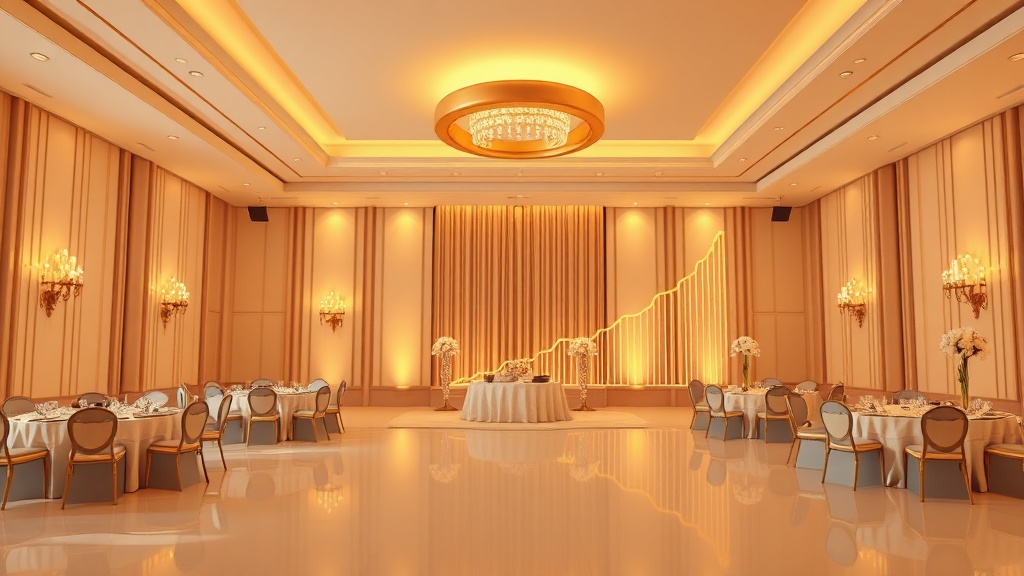
- A single wedding party typically means 20-80 room nights — one of the highest-volume revenue lines you can book from a single contract.
- Event-focused pricing in shoulder months like May and October can turn a low-occupancy period into a high-revenue one.
- Room block contracts need clear, distinct terms to manage cancellation/postponement risk.
- Corporate events (meetings, training, workshops) offer a complementary revenue channel that fills weekday occupancy gaps.
- Event revenue brings F&B, transfer, and extra-service income alongside room revenue.
- A mispriced wedding package causes both direct revenue loss and the opportunity cost of turning away regular guests on that date.
Why Weddings and Events Deserve Their Own Revenue Strategy
For a hotel or rental property, a single wedding booking can carry dozens of times the volume of a typical individual reservation: the couple's families, guests, sometimes a planning team, all tied to 20-80 room nights under one contract. That means months' worth of individual booking effort captured in a single transaction, both in occupancy and cash flow terms.
The real strategic opportunity lies in how event demand is distributed seasonally. Turkey's wedding season runs May through October, but outside the peak of July-August, shoulder months like May and October typically see individual tourism demand drop off while wedding/event demand stays relatively strong. Pricing that window correctly is what turns a low season into a high-revenue one.
Room Block Sales: Getting the Contract Structure Right
Room block sales for a wedding or event group need a different contract logic than a standard individual booking. The group organizer (typically the couple's family or a wedding planning company) holds a set number of rooms as a 'block,' and part of that block may not be confirmed until close to the date. Managing that uncertainty requires a clear contract structure.
| Contract element | Recommended approach | Why it matters |
|---|---|---|
| Block release date | 30-45 days before the event | Lets unsold rooms return to general sale in time |
| Deposit | 20-30% of total, due at signing | Reduces cancellation risk and secures cash flow |
| Minimum room guarantee | 60-70% of block size | Keeps the organizer's commitment realistic |
| Cancellation/postponement terms | Tiered refund based on time remaining before the event | Protects both sides fairly |
| Extra service pricing | Separate and clear (transfers, early check-in, extra beds) | Prevents last-minute negotiation or disputes |
Getting Pricing Right: Package or Room-Plus-Extras?
There are two basic approaches to wedding and event pricing: a fixed 'wedding package' (room + venue + set services at one price) or a room rate plus separately priced services. For small-to-mid-size properties, the second approach is usually more flexible and lower-risk, because every group's needs (transfer count, extra beds, early check-in) differ, and a fixed package either ignores those differences and erodes margin, or prices too high and loses competitiveness.
- Derive the room rate from your standard seasonal/daily tariff, applying a group discount tiered to room-night volume
- Price the venue/hall rental as a separate line item (based on capacity and duration)
- Price extras like transfers and early check-in/late check-out à la carte
- Offer F&B (meals, cocktail hour) per-person, kept separate from the room package
- Offer an extra discount for weekday weddings (Monday-Thursday) to spread out weekend demand
Filling Shoulder Season with Event Demand
While individual tourist demand drops in May and October, wedding and especially corporate event demand (company meetings, training, workshops, product launches) can stay relatively steady. Actively targeting both segments — partnering with local wedding planning companies, reaching out to corporate event agencies — is a strategy that directly moves the needle on low-season occupancy.
Extra Revenue Lines: Earning Beyond the Room Rate
A wedding or event's real revenue potential goes well beyond the room rate. F&B (meals, cocktail hour, cake), transfer services, venue use for photography/video, an extra decoration permit fee, and a post-wedding honeymoon package are all line items that can meaningfully increase the total revenue captured from a single event. Pricing and offering each of these separately — rather than burying them inside a package — improves both transparency and revenue optimization.
Managing Groups in Your Booking System
Manually tracking dozens of rooms tied to a single wedding group — who's confirmed, who's cancelled, what's still held in the block — quickly gets messy on paper or in scattered spreadsheets. Grouping block bookings under a single reference in a centralized booking system, tracking block status live, and getting an automatic reminder for the release date, meaningfully reduces operational error, especially during peak wedding season.
Wedding and event revenue isn't demand that shows up by chance — it's a channel you can deliberately build through correct pricing, clear contract terms, and targeted outreach. Properties that actively develop this channel, especially during shoulder months, meaningfully fill the deepest dips in their annual occupancy curve.
Frequently Asked Questions
Is a small apart-hotel enough to host weddings?
+
Even without your own venue space, you can partner with a nearby wedding venue and supply accommodation only (room block sales) — a way to capture revenue without taking on venue-operation overhead.
How should the block release date be set?
+
30-45 days before the event is a reasonable balance point — giving the organizer enough time to confirm a realistic headcount while still leaving you time to return unsold rooms to general sale.
How much deposit should I collect from a wedding group?
+
20-30% of the total, due at signing, is common practice — it reduces cancellation risk while setting a reasonable commitment level for the organizer.
Are corporate events less profitable than weddings?
+
F&B and extra-service demand is often more limited than weddings, but corporate events fill the weekday occupancy gap and offer more predictable, repeatable demand — making the segment strategically valuable as a complement.
Should I price weddings as a fixed package or à la carte?
+
An à la carte approach (room rate plus separately priced services) is usually more flexible and lower-risk for small-to-mid-size properties, since it adapts easily to each group's different needs.
Do I need a specific pricing strategy for shoulder season?
+
Yes — in months like May and October, when individual demand drops but wedding/event demand stays relatively steady, dedicated group pricing and targeted outreach directly move the needle on low-season occupancy.
Manage Group Bookings From One Screen
Track your wedding and event groups' room blocks, release dates, and extra revenue lines all from one system with HotelPilot.